
Vomiting in Children Bangalore: Common Causes, Warning Signs, and When to See a Pediatric Surgeon
Few medical symptoms cause as much anxiety for parents as sudden or continuous vomiting in children in Bangalore. Whether it is an infant throwing up milk forcefully, a toddler experiencing sudden stomach cramps and retching, or a school-aged child complaining of sharp abdominal pain, vomiting is one of the most frequent reasons parents rush to pediatric clinics and emergency rooms.
In many instances, vomiting is caused by self-limiting medical conditions such as viral gastroenteritis (commonly known as the stomach flu) or minor dietary indiscretions. However, vomiting can also be a cardinal symptom of severe underlying gastrointestinal emergencies, structural bowel blockages, or acute surgical conditions. Recognizing the difference between a benign home-managed illness and a true medical emergency is critical for every parent.
This comprehensive guide authored in collaboration with pediatric specialists at Kshema Pediatric Clinic explores the primary causes of vomiting in children Bangalore parents should know. We cover critical warning signs such as green vomiting in children, blood in vomit, and persistent retching, while outlining exactly when to see a pediatric surgeon for vomiting to safeguard your child’s health.
Understanding Child Vomiting: Medical vs. Surgical Causes
To evaluate vomiting effectively, pediatric specialists divide causes into non-surgical (medical) conditions and structural (surgical) conditions. Understanding this distinction helps parents seek the right medical specialist, whether a general pediatrician or a child vomiting doctor in Bangalore specializing in pediatric surgery.
Non-Surgical (Medical) Causes
These conditions typically resolve with conservative management, fluid replacement, and supportive care:
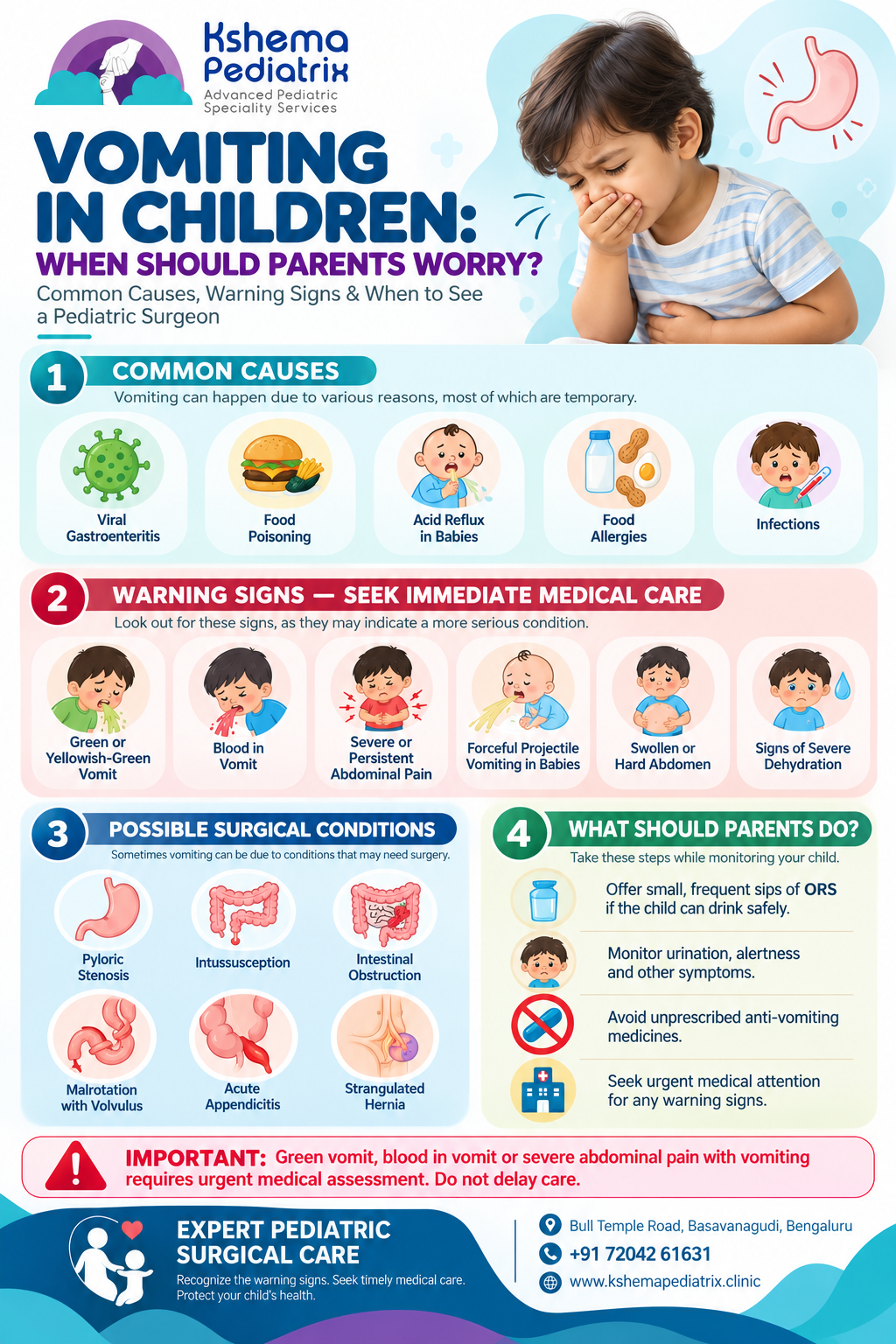
- Acute Viral Gastroenteritis: The most frequent cause of vomiting in children. Caused by viruses such as Rotavirus, Norovirus, or Adenovirus, it is typically accompanied by watery diarrhea, mild fever, and abdominal cramps.
- Food Poisoning & Dietary Indiscretion: Ingestion of contaminated food or water leads to rapid-onset vomiting, often affecting multiple family members.
- Infections Outside the Gastrointestinal Tract: High fever from ear infections (otitis media), urinary tract infections (UTI), pneumonia, or strep throat can trigger reflex vomiting in young infants.
- Feeding Difficulties & Acid Reflux: Overfeeding or gastroesophageal reflux (GERD) frequently leads to effortless regurgitation or spitting up in babies.
Surgical & Structural Causes (Requires Immediate Pediatric Surgery Evaluation)
When vomiting is caused by physical blockages or acute organ inflammation, conservative medical management is insufficient. Immediate intervention by a qualified pediatric surgeon in Bangalore is necessary to prevent severe complications:
- Hypertrophic Pyloric Stenosis (HPS): A major cause of projectile vomiting in babies aged 2 to 8 weeks. Thickening of the stomach outlet muscle blocks food from entering the intestines.
- Intussusception: Occurs when one segment of the intestine telescopes into another. Causes sudden, severe episodes of vomiting and abdominal pain in children, accompanied by dark red “currant jelly” blood in the stool.
- Malrotation with Midgut Volvulus: A congenital anomaly where the gut twists on its blood supply. Manifests as sudden green vomiting in children and requires emergency surgery to restore blood flow.
- Acute Appendicitis: Inflammation of the appendix presenting with localized lower right abdominal pain, persistent vomiting, low-grade fever, and refusal to eat.
- Strangulated Inguinal Hernia: A soft tissue bulge in the groin that becomes trapped, cutting off blood supply and causing vomiting due to intestinal obstruction in children.
Diagnostic Summary Table: Differentiating Causes by Age Group
| Age Group | Most Common Non-Surgical Causes | Major Surgical Emergency Causes | Key Clinical Features |
| Infants (0–12 Months) | Overfeeding, GERD, Viral Gastroenteritis, Milk Protein Allergy | Hypertrophic Pyloric Stenosis, Volvulus, Intussusception | Projectile non-bilious vomit, green vomit, abdominal distension, extreme lethargy |
| Toddlers (1–3 Years) | Viral Gastroenteritis, Accidental Ingestion, Food Allergy | Intussusception, Strangulated Inguinal Hernia, Foreign Body Ingestion | Intermittent severe pain, crying spells, red jelly stool, sudden green vomiting |
| Children (4–12 Years) | Gastroenteritis, Food Poisoning, Motion Sickness, Urinary Tract Infection | Acute Appendicitis, Bowel Obstruction, Abdominal Trauma | Persistent vomiting and abdominal pain, fever, localized right lower quadrant tenderness |
Red Flag Warning Signs: When Vomiting Demands Emergency Care
While many vomiting episodes resolve with fluids and rest, parents must remain vigilant. Immediate medical evaluation at a specialized pediatric surgery in Bangalore facility is mandatory if any of the following critical warning signs appear:
CRITICAL RED FLAGS – SEEK IMMEDIATE MEDICAL ATTENTION
- Bilious (Bright Green or Dark Yellow) Vomit
- Blood in Vomit (Bright red flecks or dark “coffee-ground” appearance)
- Persistent Vomiting & Severe Abdominal Pain (Child crying inconsolably or drawing knees to chest)
- Projectile Vomiting in Babies (Forceful spraying across distances after every feed)
- Abdominal Swelling / Distension (Stomach feels hard, tight, or painful to touch)
- Signs of Severe Dehydration (No wet diapers for 8 hours, sunken eyes, dry mouth, absence of tears, extreme lethargy)
Deep Dive on Critical Red Flags
Bilious Vomiting in Children
Bile is a greenish-yellow digestive fluid produced by the liver and secreted into the small intestine. When a child vomits green fluid, it means stomach contents are mixing with bile because transit further down the digestive tract is physically blocked. Green vomiting in children, or bilious vomiting in children, is considered a surgical emergency until proven otherwise, as it points directly to vomiting due to intestinal obstruction in children.
Blood in Vomit in Children
Seeing blood in vomit in children (hematemesis) can be terrifying for parents. While small specks can occasionally result from minor tears in esophageal blood vessels after violent retching (Mallory-Weiss tear), significant red blood or coffee-ground material indicates upper gastrointestinal bleeding or vascular abnormalities that demand expert diagnostic investigation.
Persistent Vomiting and Abdominal Pain
When persistent vomiting and abdominal pain in children occur together especially if the pain precedes the vomiting or steadily worsens over several hours it strongly points to acute intra-abdominal surgical conditions like appendicitis, peritonitis, or bowel ischemia.
In-Depth Focus: Major Surgical Conditions Causing Pediatric Vomiting
A. Hypertrophic Pyloric Stenosis (HPS) in Infants
Pyloric stenosis is one of the most classic surgical causes of vomiting in babies that Bangalore pediatricians diagnose. It occurs when the muscle surrounding the pylorus (the valve connecting the stomach to the small intestine) thickens abnormally, preventing breast milk or formula from passing through.
- Peak Age: Typically develops between 2 and 8 weeks of life.
- Key Symptom: Distinct projectile vomiting in babies that occurs 30–60 minutes after feeding. The vomit is non-bilious (white/curdy milk).
- Behavioral Clue: The infant remains intensely hungry immediately after vomiting (“hungry vomiter”).
- Treatment: After confirmation via pediatric abdominal ultrasound, HPS is permanently corrected through a minor, highly successful procedure called a Pyloromyotomy, performed by an experienced children’s surgeon in Bangalore.
B. Intussusception in Toddlers
Intussusception is the leading cause of intestinal obstruction in infants and toddlers aged 5 to 36 months. It occurs when one section of the bowel folds into an adjacent segment like a collapsing telescope, cutting off blood supply.
- Symptoms: Sudden episodes of excruciating abdominal pain where the child screams and pulls their knees to their chest, interspersed with pain-free periods. This is accompanied by recurrent vomiting in children, which Bangalore parents notice, alongside dark red “currant jelly” stools containing blood and mucus.
- Treatment: Early diagnosis allows non-surgical reduction using an air or contrast enema. Delayed diagnosis requires emergency laparoscopic evaluation by a pediatric surgeon Bangalore families trust.
C. Acute Appendicitis in School-Age Children
Appendicitis is the single most common emergency abdominal surgery performed in children. Inflammation of the appendix leads to swelling, bacterial proliferation, and potential rupture if untreated.
- Symptoms: Pain that begins around the belly button before shifting to the lower right abdomen, accompanied by low-grade fever, loss of appetite, and vomiting and abdominal pain in children Bangalore doctors frequently evaluate.
- Treatment: Minimally invasive laparoscopic appendectomy to safely remove the inflamed appendix before perforation occurs.
Home Care Protocols & First-Aid Rehydration Guidance
If your child has mild, non-bilious vomiting without severe abdominal pain, high fever, or lethargy, conservative home care can be initiated while monitoring closely for changes. For comprehensive pediatric vomiting treatment, Bangalore specialists recommend the following step-by-step approach:
- Step 1: Pause Feeding (Gut Rest)
Do not force solid foods, milk, or large volumes of water immediately after a vomiting episode. Allow the child’s stomach to settle for 30 to 60 minutes. - Step 2: Small, Frequent Oral Rehydration
Offer Oral Rehydration Solution (ORS) in very small amounts 1 to 2 teaspoons (5–10 ml) every 5 minutes using a spoon or syringe. Gradually increase the volume as the child demonstrates tolerance. - Step 3: Gradual Re-introduction of Bland Foods
Once vomiting has stopped for 4 to 6 hours, introduce small portions of bland, easily digestible foods (such as bananas, plain rice, applesauce, or dry toast). Avoid oily, spicy, fried, or high-sugar items. - Step 4: Avoid Unprescribed Medications
Never administer over-the-counter anti-vomiting medications (antiemetics) or antibiotics to children without direct guidance from a pediatrician or pediatric surgeon.
Specialized Diagnostic & Surgical Care at Kshema Pediatric Clinic
When parents face persistent vomiting in children in Bangalore, Kshema Pediatric Clinic provides rapid, compassionate, and expert clinical evaluation under the leadership of Dr. Ramesh Santhanakrishnan, a senior pediatric surgeon in Bangalore with over 33 years of dedicated clinical practice and a pioneer in pediatric minimal access (laparoscopic) surgery.
Working alongside specialist pediatric gastroenterologists like Dr. Shruthi Badarinath Pranav https://www.kshemapediatrix.clinic/specialties/pediatric-gastroenterology, the multidisciplinary team at Kshema Pediatrix ensures every child receives precise diagnostic evaluation and humane care.
Our Clinical & Diagnostic Workflow
- Rapid Triage & Examination: Gentle, specialized pediatric abdominal palpation and dehydration assessment in a child-friendly environment.
- High-Precision Diagnostic Imaging: In-clinic pediatric ultrasound and Doppler imaging to detect pyloric stenosis, intussusception, or appendicitis swiftly without unnecessary radiation exposure.
- Minimally Invasive Laparoscopic Surgery: When surgical intervention is required, advanced pediatric laparoscopic techniques pioneered by Dr. Ramesh Santhanakrishnan ensure minimal postoperative discomfort, microscopic incisions, and rapid recovery.
- Family-Centered Recovery: Comprehensive follow-up and nutritional guidance to ensure your child returns to vibrant health.
EXPERT PEDIATRIC CONSULTATION AT KSHEMA PEDIATRIX CLINIC
Is your child experiencing severe vomiting, green vomit, or unexplained stomach pain? Do not wait for symptoms to worsen.
- Chief Pediatric Surgeon: Dr. Ramesh Santhanakrishnan
(Director & Chief Pediatric Surgeon) - Website: https://www.kshemapediatrix.clinic/
- Location: Bull Temple Road, Basavanagudi, Bangalore, Karnataka
- Appointment Booking: Visit our website or call our clinic desk at +91 72042 61631 for immediate triage support.
Frequently Asked Questions :
Q1. What are the most common causes of vomiting in children in Bangalore?
The most common causes include acute viral gastroenteritis (stomach flu), food poisoning, dietary indiscretion, milk protein allergies in infants, viral infections outside the gut, and motion sickness. However, sudden persistent vomiting accompanied by severe stomach pain may indicate a surgical condition requiring prompt evaluation by a pediatric surgeon in Bangalore.
Q2. When should I consult a pediatric surgeon for vomiting in Bangalore?
You should consult a pediatric surgeon immediately if your child experiences green (bilious) vomiting, blood in vomit, persistent vomiting with acute abdominal pain, projectile vomiting in infants, a swollen abdomen, severe lethargy, or high fever. These are hallmark warning signs of surgical emergencies like intestinal obstruction or appendicitis.
Q3. Why is green or bilious vomiting in children considered a medical emergency?
Green or yellowish-green vomit contains bile, which indicates a blockage below the opening of the bile duct in the duodenum. Bilious vomiting in children is often caused by intestinal obstruction, such as gut malrotation, midgut volvulus, or intussusception, and requires emergency assessment by a children’s surgeon in Bangalore.
Q4. What does projectile vomiting in babies signify?
Projectile vomiting in babies where stomach contents forcefully eject several feet—is a key symptom of Hypertrophic Pyloric Stenosis (HPS), a condition where the stomach outlet muscle thickens. It typically affects infants aged 2 to 8 weeks and requires diagnostic ultrasound and evaluation by a pediatric surgeon for surgical correction.
Q5. How can I differentiate between normal infant spitting up and severe vomiting in babies?
Spitting up (reflux) is effortless, small in quantity, and occurs shortly after feeding without causing infant distress. Severe vomiting in babies Bangalore specialists evaluate is forceful, larger in volume, may be bilious or blood-tinged, and is accompanied by persistent crying, refusal to feed, poor weight gain, or lethargy.
Q6. What causes sudden severe vomiting and abdominal pain in children?
Sudden persistent vomiting and abdominal pain in children can stem from acute appendicitis, intussusception (telescoping of the intestine), bowel obstruction, severe gastroenteritis, or strangulated hernia. If pain is localized around the belly button or lower right abdomen, consult a pediatric surgery hospital Bangalore right away.
Q7. What is intussusception and how does it cause vomiting in toddlers?
Intussusception occurs when one portion of the intestine slides into an adjacent segment like a telescope. It causes severe intermittent abdominal pain (child pulls knees to chest), bilious vomiting, and “currant jelly” stool containing blood and mucus. It is a pediatric surgical emergency.
Q8. Can food poisoning lead to persistent vomiting in children in Bangalore?
Yes, viral or bacterial food poisoning from contaminated food or water can cause rapid-onset, severe vomiting in children. While most cases resolve with oral rehydration, persistent vomiting that prevents fluid retention requires hospital evaluation to prevent severe dehydration.
Q9. What are the early signs of dehydration in a vomiting child?
Early dehydration signs include dry mouth and tongue, absence of tears when crying, fewer than 3–4 wet diapers a day (in infants), sunken eyes, extreme irritability or lethargy, and cold hands and feet. Dehydration requires prompt rehydration therapy or IV fluids.
Q10. What should I feed my child after an episode of severe vomiting?
Pause solid foods for 1–2 hours after vomiting. Offer small, frequent sips (1–2 teaspoons every 5–10 minutes) of Oral Rehydration Solution (ORS). Avoid plain water in large quantities, sugary juices, milk, and greasy foods. Reintroduce bland foods like bananas, rice, applesauce, or toast slowly once vomiting ceases.
Q11. How is acute appendicitis diagnosed in children with vomiting and stomach pain?
Appendicitis is diagnosed through a combination of physical abdominal examination by a pediatric surgeon, blood tests (elevated white cell count), and abdominal ultrasound or low-dose CT scans to visualize the inflamed appendix before performing a laparoscopic appendectomy.
Q12. What is Malrotation with Volvulus in infants?
Malrotation is a congenital abnormality where the intestines do not twist properly during fetal development. Volvulus occurs when the intestine twists on its blood supply, leading to sudden green vomiting in children and severe pain. It requires emergency pediatric surgery to prevent intestinal damage.
Q13. When does abdominal pain with vomiting require emergency surgery in children?
Emergency surgery is required when vomiting is caused by mechanical obstructions (volvulus, intussusception, strangulated hernia) or acute intra-abdominal inflammation (ruptured appendicitis, peritonitis). Immediate evaluation by a children’s surgeon in Bangalore is vital.
Q14. Can severe constipation cause recurrent vomiting in children?
Yes, severe chronic constipation can cause stool impaction in the colon, leading to abdominal distension, loss of appetite, nausea, and recurrent vomiting in children Bangalore families frequently report.
Q15. Is blood in vomit (hematemesis) always serious in children?
Blood in vomit in children should always be evaluated by a pediatrician or child vomiting doctor in Bangalore. While small flecks of bright red blood can result from a minor tear in the esophagus caused by hard retching (Mallory-Weiss tear), large amounts of dark or bright red blood indicate serious upper gastrointestinal bleeding.
Q16. How does a pediatric surgeon treat intestinal obstruction in children?
Treatment depends on the cause. Some conditions like intussusception may be non-surgically reduced using air or contrast enemas. Mechanical obstructions, volvulus, or obstructed hernias require urgent open or laparoscopic surgery by a specialist pediatric surgeon.
Q17. What diagnostic tests are conducted for persistent vomiting at Kshema Pediatric Clinic?
At Kshema Pediatric Clinic, Dr. Ramesh Santhanakrishnan and the team conduct thorough clinical evaluations supported by targeted diagnostic imaging such as pediatric abdominal ultrasound, Doppler scans, abdominal X-rays, routine blood work, and urine analysis to pinpoint exact causes.
Q18. Can viral infections other than stomach flu cause vomiting in children?
Yes, infections such as otitis media (middle ear infection), urinary tract infections (UTI), pneumonia, and meningitis can trigger reflex vomiting in infants and young children.
Q19. Why should parents choose a specialist pediatric surgeon over a general surgeon for children’s surgery?
Children are not small adults. Specialized pediatric surgeons possess advanced fellowship training in child anatomy, delicate tissue handling, pediatric anesthesia, and specialized pediatric laparoscopic techniques, ensuring significantly higher safety margins and optimal outcomes.
Q20. How can I book an urgent consultation with a pediatric surgeon for vomiting in Bangalore at Kshema Pediatric Clinic?
You can schedule an immediate consultation with Dr. Ramesh Santhanakrishnan at Kshema Pediatrix Clinic by visiting https://www.kshemapediatrix.clinic/ or contacting our clinic desk directly at +91 72042 61631 for urgent triage assistance.
Conclusion: Partnering for Your Child’s Health & Safety
Vomiting in children is a common symptom, but it should never be ignored especially when accompanied by red flags like green bile, blood, or severe abdominal pain. Knowing when to see a pediatric surgeon for vomiting empowers parents to take decisive action, avoiding dangerous delays in surgical emergencies.
At Kshema Pediatric Clinic, we are committed to providing top-tier medical and surgical care for infants, toddlers, and young children across Bangalore. Save our clinic contact details today, and always trust expert pediatric guidance when your child’s health is on the line.
