
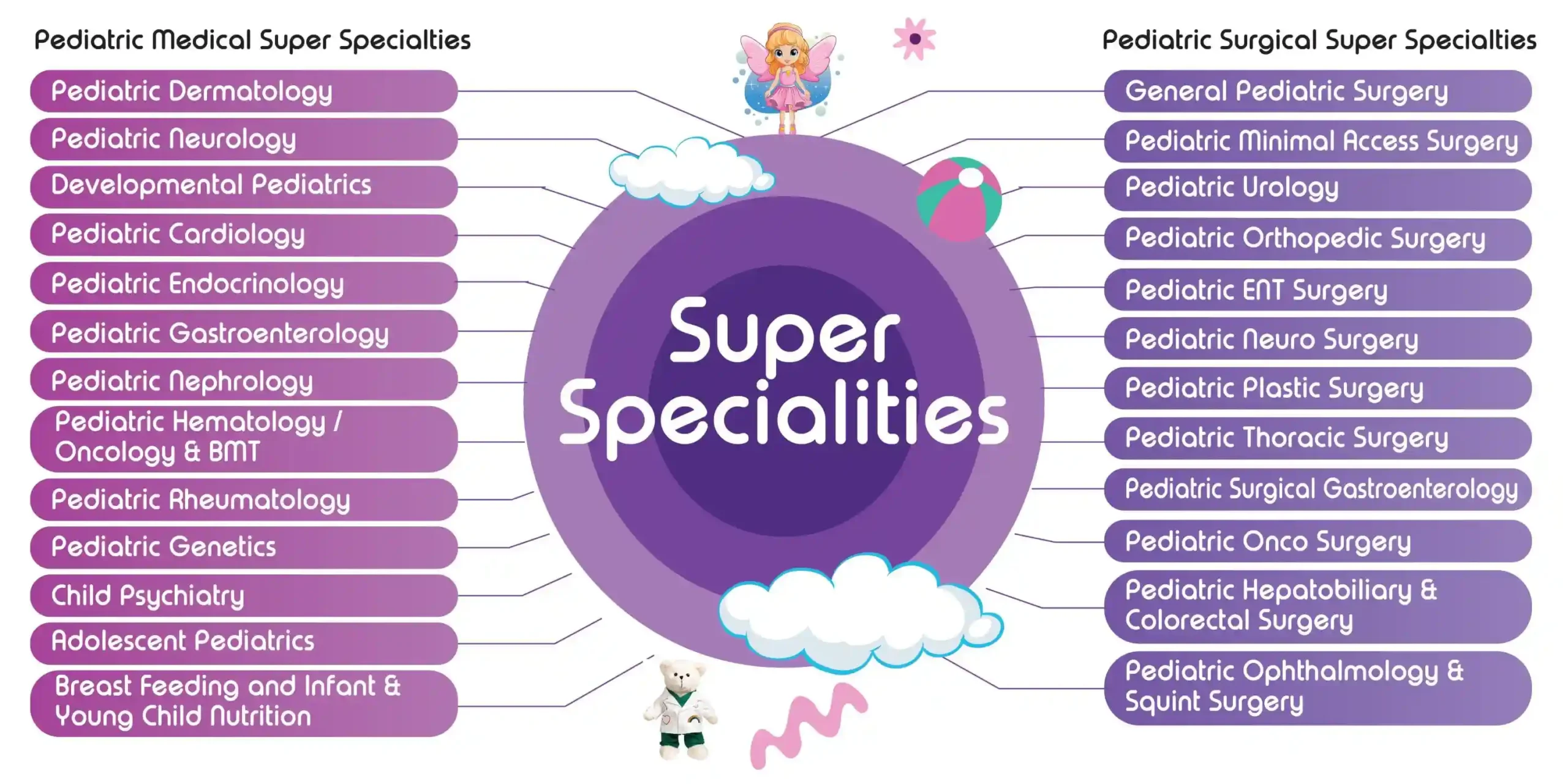
“Every child deserves surgical care that is designed specifically for children not adapted from adult care.”
When parents hear that their child may need an operation, it is natural to feel anxious and overwhelmed. One of the first questions many parents ask when consulting a doctor in Bangalore is:
“Does my child really need a pediatric surgeon, or can any general surgeon perform the operation?”
The answer lies in a simple but crucial medical fact: Children are not just small adults.
From newborn babies weighing barely a kilogram to teenagers approaching adulthood, children undergo rapid physical, physiological, and emotional changes. Their bodies respond to disease, surgery, anesthesia, pain, and healing very differently from adults. Caring for them requires specialized knowledge, surgical expertise, and a child-friendly approach that extends far beyond the operating room.
What Makes Pediatric Surgery Different?
Pediatric surgery is a distinct super-specialty devoted exclusively to the surgical care of infants, children, and adolescents.
A qualified pediatric surgeon in Bangalore undergoes years of rigorous, specialized training after completing general surgical qualification. This advanced training focuses specifically on conditions unique to growing bodies:
-
Congenital abnormalities (present at birth)
-
Neonatal surgery
-
Minimally invasive laparoscopic and thoracoscopic surgery for children
-
Pediatric gastrointestinal disorders
-
Thoracic (chest) surgery
-
Pediatric trauma and childhood surgical cancers
More importantly, pediatric surgical specialists understand how children grow and develop—and how a surgical procedure performed today can influence their health, development, and quality of life for decades to come.
Many Surgical Problems in Children Are Unique
Unlike adults, many surgical conditions in children are present from birth or develop during early developmental stages.
These specialized conditions are rarely encountered in adult surgical practice and require expert evaluation at a dedicated pediatric surgical center in Bangalore:
-
Congenital hernias (inguinal and umbilical)
-
Undescended testes and hypospadias
-
Hirschsprung disease and anorectal malformations
-
Congenital diaphragmatic hernia and tracheoesophageal fistula
-
Intestinal obstruction in newborns
-
Biliary atresia and congenital lung malformations
-
Pediatric tumors
Pediatric Medical Assessment Is Fundamentally Different
Children often cannot describe their symptoms clearly or articulate pain.
-
A toddler with severe abdominal pain may simply cry continuously or refuse feeds.
-
A newborn baby with a serious obstruction may only appear unusually sleepy or lethargic.
-
A teenager may hesitate to discuss sensitive symptoms due to embarrassment.
Pediatric surgeons are trained to recognize these subtle physical signs and understand how illnesses present differently across various age groups. A comprehensive pediatric surgical evaluation includes:
-
Birth and developmental history
-
Growth trajectories and nutritional status
-
Vaccination history
-
Associated congenital anomalies
-
Family dynamics and psychological well-being
Every medical decision is made keeping in mind not only the child’s present illness, but also their future growth and overall development.
Child-Specific Surgical Expertise and Precision
Operating on infants and young children requires specialized technical skills:
-
Micro-scale anatomical structures: Organs are significantly smaller and tissues are far more delicate. The margin for error is minimal.
-
Blood volume sensitivity: Blood loss that appears insignificant in an adult can become critical in a newborn.
-
Specialized instrumentation: Children require pediatric-sized instruments, scopes, and monitoring equipment tailored to their body proportions.
Whenever possible, top pediatric surgeons in Bengaluru utilize minimally invasive techniques (laparoscopy or thoracoscopy). These advanced methods minimize post-operative pain, reduce hospital stays, eliminate large scars, and allow children to return to play and school faster.
Children Respond Differently to Anesthesia
Safe surgical care is always a collaborative team effort. Specialized pediatric surgeons work closely with dedicated pediatric anesthesiologists.
Maintaining body temperature, fluid balance, blood sugar control, and targeted pain relief during surgery requires expertise that differs considerably from adult anesthesia protocols.
Specialized Pediatric Recovery and Long-Term Care
While children often recover remarkably quickly, post-surgical care involves much more than basic wound healing. A pediatric surgical team manages:
-
Age-appropriate feeding and nutrition
-
Post-operative growth and physical development
-
Child-centric pain management strategies
-
Emotional well-being and smooth transition back to school
-
Long-term developmental follow-ups
Many pediatric surgical conditions require structured follow-up through adolescence to ensure normal organ function and development as the child matures.
Caring for the Entire Family
Perhaps the biggest difference in pediatric surgical practice is that the young patient is never treated in isolation.
-
Parents are anxious and seeking clear answers.
-
Grandparents have detailed concerns.
-
Young children are frightened by clinical environments.
-
Teenagers seek independence while still needing emotional reassurance.
A compassionate pediatric surgical team understands these emotional dynamics. Explaining conditions clearly, discussing all treatment options, answering questions patiently, and involving parents in every decision are integral parts of complete pediatric care.
When Should You Consult a Pediatric Surgeon in Bangalore?
You should seek a specialist pediatric surgical opinion if your child exhibits any of the following signs:
-
A noticeable swelling in the groin or umbilical (belly button) area
-
An undescended testis or asymmetrical scrotum
-
An abnormal urinary opening (hypospadias)
-
Persistent constipation since infancy or difficulty passing stools from birth
-
Recurrent urinary tract infections (UTIs) linked to structural abnormalities
-
Congenital swellings, neck cysts, or soft tissue lumps
-
Persistent abdominal pain requiring surgical evaluation
-
Chest wall deformities (such as sunken or protruding chest)
-
Recurrent abscesses or pilonidal sinus disease
-
Any congenital anomaly identified during prenatal scans or birth
Early evaluation by a child surgery specialist in Bangalore leads to simpler interventions, better healing, and optimal long-term outcomes.
The Goal Is More Than a Successful Operation
A successful pediatric operation is not measured only by what happens inside the operating room.
The primary goal is to help every child grow into a healthy, active, confident adult with the best possible quality of life preserving normal body growth, protecting long-term physiological function, minimizing scarring, and supporting the family throughout the healing journey.
Final Thoughts for Parents
When surgery becomes necessary for your child, choosing a specialist trained exclusively in pediatric care is one of the most important decisions you can make. Children deserve healthcare designed around their unique biology not because they are smaller, but because they are still growing, developing, and building the foundation for a lifetime of health.
If you are looking for trusted surgical care for your infant, child, or teenager, consult an experienced pediatric surgeon in Bangalore to ensure your child receives the gentle, expert care they deserve.
Frequently Asked Questions (FAQs)
1. What is the difference between a pediatrician and a pediatric surgeon?
A pediatrician manages general medical health, routine vaccinations, illnesses, and overall development. If your child develops a condition that requires an operation such as a hernia, appendicitis, or a birth defect the pediatrician will refer you to a pediatric surgeon, who is specifically trained to perform surgical operations on growing children.
2. Why can’t a general surgeon perform an operation on my child?
While adult general surgeons are skilled in operating on adults, children have significantly different anatomy, physiology, and anesthesia tolerance. Pediatric surgeons undergo 2 to 3 years of additional specialized fellowship training to master delicate pediatric tissues, micro-scale instruments, and child-specific post-operative care.
3. What is the maximum age limit for a pediatric surgeon in India?
Pediatric surgeons care for patients from premature newborns up to 18 years of age (adolescents).
4. What are the most common surgeries performed by pediatric surgeons?
Common pediatric procedures include:
-
Inguinal & umbilical hernia repairs
-
Undescended testes (Orchidopexy)
-
Appendectomy (appendix removal)
-
Circumcision and hypospadias repair
-
Corrective operations for birth defects (congenital anomalies) in newborns
5. How do I prepare my child emotionally for surgery?
Be honest and use age-appropriate language. Avoid using frightening words like “cut” or “sharp.” Reassure them that the operation is meant to make them feel better and that you will be right there when they wake up. Bringing a favorite blanket or toy to the hospital can also help ease anxiety.
6. Is keyhole (laparoscopic) surgery safe for babies and children?
Yes. Advanced pediatric centers in Bangalore regularly perform minimally invasive (laparoscopic or keyhole) surgeries on infants and children. Keyhole procedures reduce surgical pain, minimize scarring, shorten hospital stays, and promote faster recovery.
7. How is pediatric anesthesia monitored during surgery?
Pediatric operations are supported by dedicated pediatric anesthesiologists. They use specialized monitor settings tailored to monitor a child’s heart rate, oxygenation, blood pressure, fluid balance, and body temperature throughout the operation.
8. What are the warning signs that my child needs an urgent pediatric surgical evaluation?
Seek immediate emergency medical care if your child exhibits:
-
Sudden, severe abdominal pain (especially accompanied by fever or vomiting)
-
Inconsolable crying with a swollen, painful lump in the groin or scrotum (strangulated hernia)
-
Greenish (bilious) vomiting in a newborn or infant
-
Inability to pass stool or gas since birth
9. Can I stay with my child in the hospital room during recovery?
Yes. Most pediatric hospitals in Bangalore encourage at least one parent to stay in the room or recovery area with the child before and immediately after surgery to provide emotional support and comfort.
10. How long will my child take to recover after surgery?
Because children’s tissues heal rapidly, recovery times are usually much shorter than in adults. For minor day-care procedures (like hernia or hydrocele repair), children can often return home the same day and resume light play within 2–3 days. Complex reconstructive or neonatal surgeries may require 1–2 weeks of monitored recovery.
11. What qualifications should I look for in a pediatric surgeon in Bangalore?
Look for degrees such as MCh (Master of Chirurgie) in Pediatric Surgery or DNB in Pediatric Surgery after an MS in General Surgery. You can also verify fellowship training in pediatric urology or neonatal surgery, as well as their association with a facility equipped with a Pediatric Intensive Care Unit (PICU).
12. How much does pediatric surgery cost in Bangalore?
The cost varies based on the procedure, hospital infrastructure, bed category, and whether the surgery is laparoscopic or open. On average:
-
Consultation fees: ₹600 to ₹1,500
-
Procedure costs: Range from ₹40,000 to ₹2,500,000 depending on complexity (e.g., minor day-care hernia vs. complex neonatal reconstructive surgery).
Most major health insurance policies and corporate TPA plans cover medically necessary pediatric surgeries.
13. What should I bring to my child’s first consultation with a pediatric surgeon?
Bring all previous medical files, pediatrician notes, recent imaging studies (USG scans, X-rays), blood test reports, immunization records, and any birth history documents.
14. Are birth defects (congenital anomalies) completely curable through surgery?
Many birth defects including congenital hernias, anorectal malformations, hypospadias, and intestinal obstructions can be completely corrected or significantly managed through surgical intervention, allowing children to lead normal, healthy lives as adults.
15. How do I find the best hospital for pediatric surgery in Bangalore?
When choosing a hospital in Bangalore, ensure it has:
-
Full-time certified pediatric surgeons and pediatric anesthesiologists
-
A specialized Neonatal Intensive Care Unit (NICU) and Pediatric Intensive Care Unit (PICU)
-
Child-friendly inpatient wards and pediatric emergency support
